
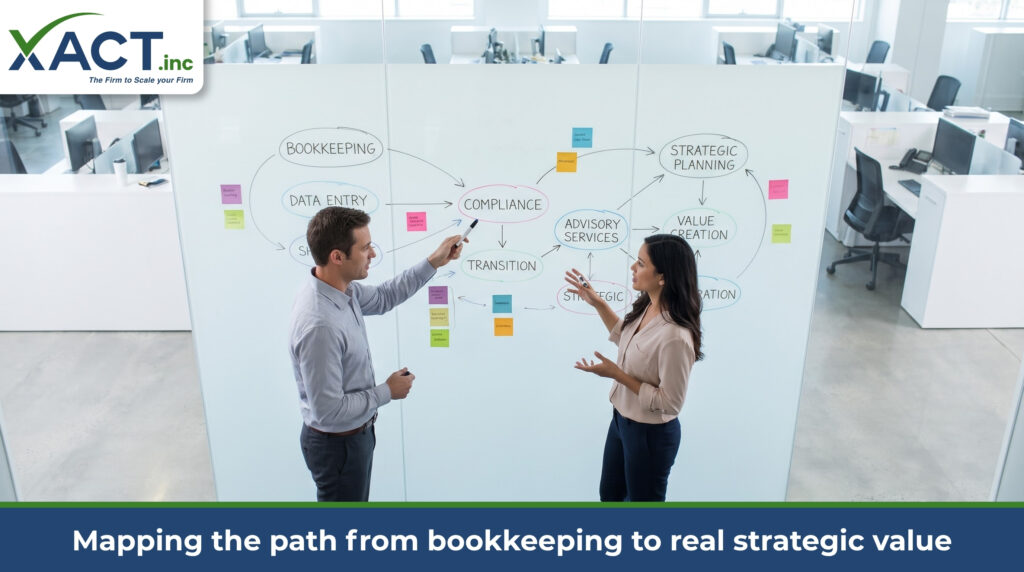
Every firm starts somewhere close to the same place: a founder or small partnership handling bookkeeping, tax prep, and everything else because there’s no other option yet. The problem is how many firms stay stuck there years later, still trading hours for dollars on routine compliance work instead of becoming the advisory-led practice they actually want to be. Outsourcing for accounting firms is what breaks that cycle, not by adding more hours in the day, but by removing the work that was never worth the firm’s best hours in the first place.
The Bottleneck Nobody Names Directly
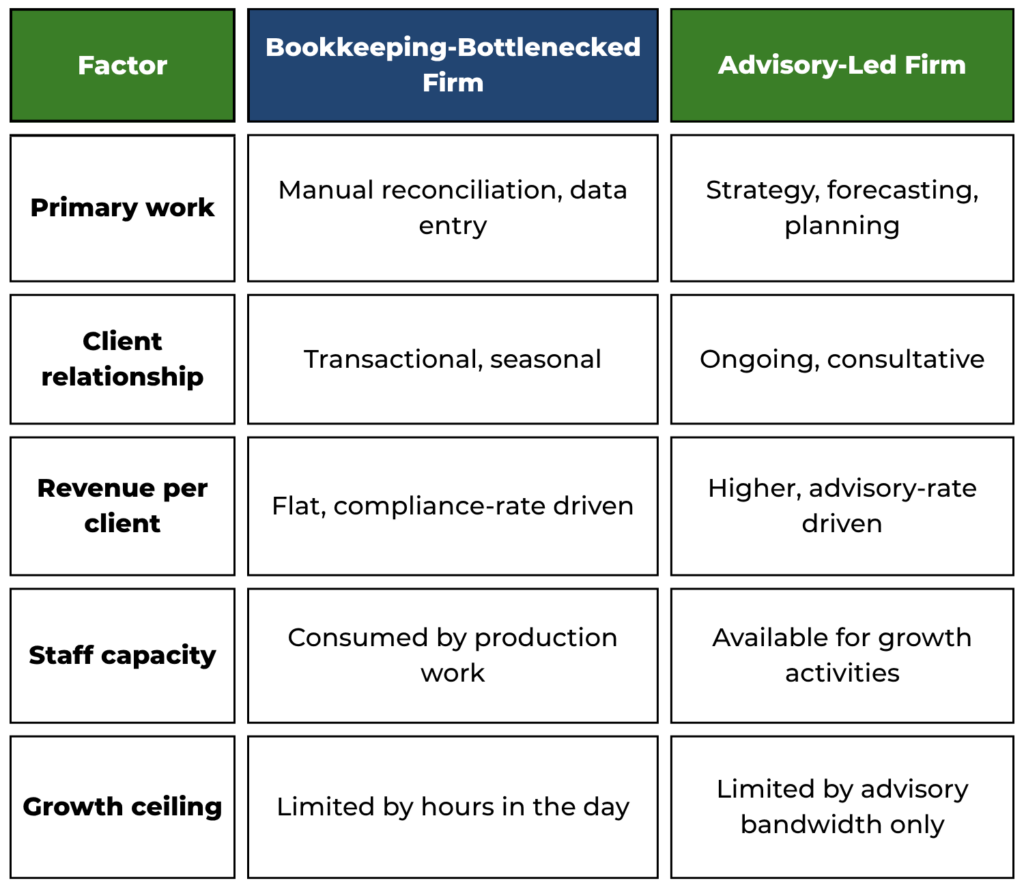
Ask most firm partners why they haven’t expanded into advisory services, and the answer usually circles back to time. Bookkeeping and accounting services consume the hours that would otherwise go toward client strategy, forecasting, and the higher-margin work advisory clients actually want. The bottleneck isn’t a lack of skill or interest; it’s that routine production work keeps eating the calendar before advisory work ever gets a real shot.
What Changes When Bookkeeping Moves Off the Plate
- Time reallocation. Hours once spent on reconciliation and data entry become hours spent on tax and advisory services conversations that build long-term client value.
- Service mix shift. Firms gradually move from compliance-heavy billing to a blend that includes forecasting, planning, and financial accounting advisory services.
- Client perception change. Clients start seeing the firm as a strategic partner instead of a once-a-year tax preparer, which changes the entire relationship.
- Margin improvement. Advisory work typically commands higher rates than compliance billing, so the same hours generate more revenue once redirected.
Before and After the Shift
How Firms Actually Make the Shift
The transition rarely happens all at once. Firms that succeed usually start by outsourcing the highest-volume, lowest-differentiation bookkeeping work first, the accounts payable accounts receivable tasks and routine reconciliations that don’t require a CPA’s judgment. Once that volume moves to a partner delivering consistent accounting and financial statements through modern bookkeeping software for business, firms reinvest the freed-up hours into a handful of pilot advisory engagements before expanding further.
Why Outsourcing Works Better Than Hiring for This
Hiring more staff to free up capacity just shifts the bottleneck instead of removing it, since new hires still need training, management, and eventually replacement when they leave. Partnering with best outsourced accounting services providers sidesteps that cycle entirely. The firm gets consistent production capacity without absorbing the turnover risk, management overhead, or ramp-up time that comes with growing headcount.
What Advisory-Led Firms Look Like a Year Later
Firms that make this shift successfully don’t just report better margins, they report different conversations with clients. Instead of reactive tax-season check-ins, staff are having proactive planning conversations throughout the year. Referrals increase, because advisory clients talk about strategic wins in a way compliance-only clients rarely do. The firm’s identity shifts from “the people who do our books” to “the people who help us grow.”

The Bottom Line
Becoming an advisory-led firm was never really about hiring more people or working longer hours. It was about removing the bookkeeping bottleneck that kept advisory work perpetually stuck at the bottom of the to-do list. Outsourcing does exactly that, and the firms that make the shift rarely look back, because once clients experience the advisory relationship, going back to a purely transactional one feels like a downgrade neither side wants.
XACT.Inc helps CPA firms move past the bookkeeping bottleneck through outsourced, cloud-based accounting and bookkeeping support built to free up capacity for advisory growth. Contact XACT.Inc today to see what your firm could become with that capacity back.