
Picture a firm partner opening a new client file in January and finding a year of bank statements still in a shoebox. That story used to be rare. In 2026, it’s routine, and it’s exactly why more CPA firms are refusing to absorb that mess in-house. Outsourced bookkeeping isn’t a workaround anymore. It’s how smart firms protect their margins, their staff, and their sanity during busy season, and the firms still holding out are starting to feel the difference in how much they can actually take on.
The Math Firms Can No Longer Ignore
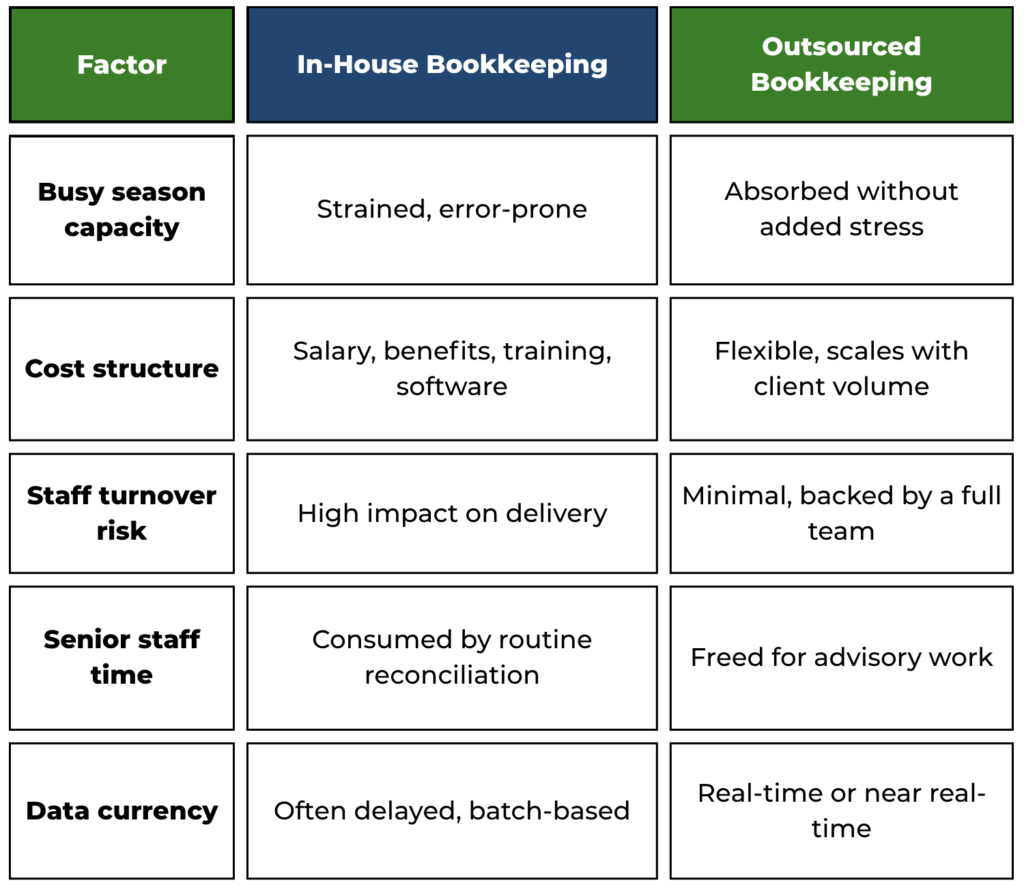
Every hour a senior accountant spends reconciling transactions is an hour not spent on the advisory work that actually pays. Firms running bookkeeping entirely in-house are quietly funding a low-margin function with their highest-paid staff, which is one of the most expensive mistakes a growing firm can make without realizing it. Outsourced bookkeeping and accounting services flip that equation, moving routine work to a dedicated partner while senior staff focus on the client relationships that build the firm’s real value.
Three Reasons This Shift Is Accelerating
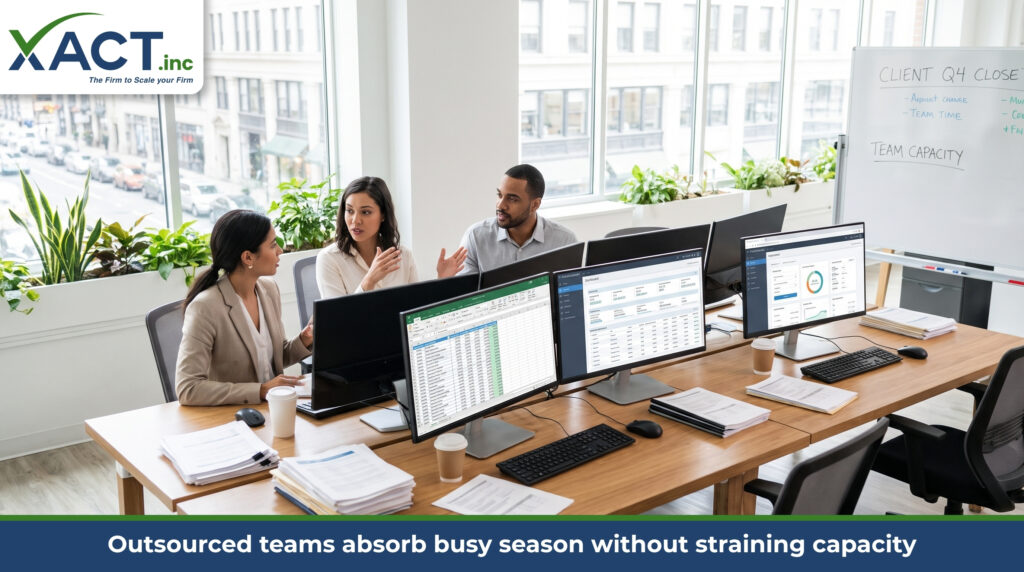
Busy season no longer breaks the whole firm: Seasonal spikes used to mean burned-out staff and rushed, error-prone work, with the same small team stretched across far too many client files at once. Firms using outsourcing for accounting firms absorb that spike without hiring and laying off temporary staff every year, keeping quality consistent when it matters most.
Clients expect cleaner books, faster: Slow, manual bookkeeping produces accounting and financial statements clients can’t act on quickly, and that lag shows up in slower decisions and frustrated clients. Outsourced teams built around bookkeeping software for business deliver current numbers clients can actually use for decisions, not just year-end filing.
The cost comparison isn’t close: A single in-house bookkeeper costs salary, benefits, training, software licenses, and management time, and that cost climbs every year even before accounting for turnover. Best outsourced accounting services providers deliver the same function, often with more consistency, at a fraction of that fully loaded cost.
In-House vs. Outsourced Bookkeeping: What Changes
What Firms Get Beyond the Cost Savings
Cost is the easiest argument to make, but it’s not the whole story. Firms partnering with financial accounting advisory services providers gain a level of resilience that’s hard to build in-house: no single point of failure, no scramble when a key employee leaves mid-tax-season, and no ceiling on how many clients the firm can take on without a hiring spree. Solid bookkeeping and accounting services also build the clean financial statements in accounting that make audits, lending conversations, and client trust far easier to earn.
Firms that treat outsourcing as a strategic layer, not just a cost-cutting move, end up with more bandwidth to grow the parts of the business that actually differentiate them, and more room to say yes to new clients instead of turning work away during peak season.

The Bottom Line
The firms still trying to do it all in-house aren’t protecting quality, they’re absorbing risk, cost, and burnout that outsourcing was built to remove. In 2026, outsourced bookkeeping isn’t the cautious choice. It’s the competitive one.
XACT.Inc gives CPA firms an outsourced, cloud-based bookkeeping partner built to handle the volume, so your team can focus on the advisory work that actually grows the firm. Contact XACT.Inc today to see what outsourced bookkeeping could take off your plate.