S-Corp and partnership returns can create a major production bottleneck when tax season accelerates. A CPA firm may have hundreds of Forms 1120S and 1065 moving through the workflow at the same time, each requiring supporting documents, workpapers, review, and client follow-up.
The challenge is preparing a high volume of returns accurately without forcing the firm’s internal team into longer hours or delaying other client work.
That is where offshore tax preparation can provide additional capacity. Firms can route standardized preparation work to an offshore accounting team while keeping review, client communication, and final responsibility in-house.
Why 1120S and 1065 Work Creates a Bottleneck
S-Corp and partnership returns involve more than entering numbers into tax software. Teams may need to organize financial information, prepare workpapers, review prior-year returns, and identify missing information before a return reaches the reviewer.
When dozens of returns arrive at once, this can create:
- Growing return backlogs
- Longer turnaround times
- Overtime during peak periods
- Senior staff spending too much time on preparation
- Less capacity for tax planning and advisory work
For firms providing accounting and tax services, managing this production workload is especially important during peak filing periods.
How Offshore Tax Prep Handles 1120S and 1065
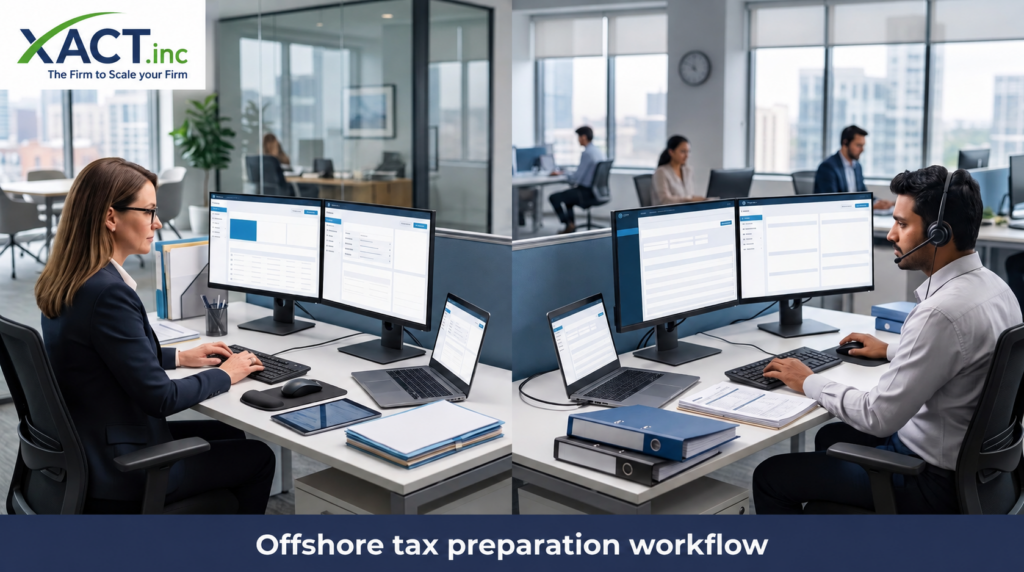
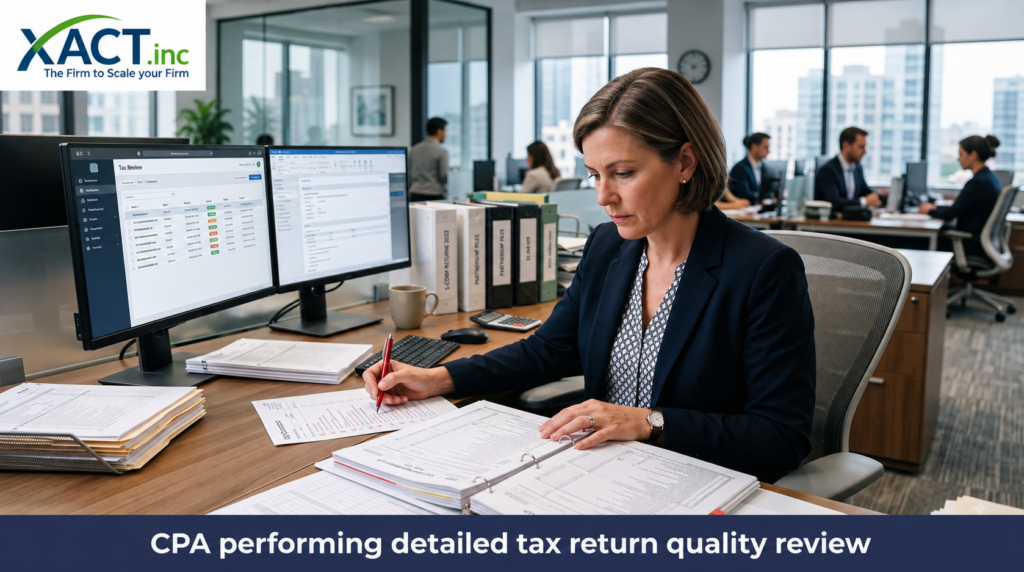
Offshore tax preparation allows CPA firms to separate preparation from final review.
An offshore team can handle defined production tasks such as organizing source documents, preparing workpapers, entering information into approved tax software, preparing draft returns, and identifying items requiring additional information.
The CPA firm’s professionals remain responsible for reviewing the work, resolving exceptions, communicating with clients, and approving the final filing.
This allows routine production work to move forward without requiring every task to be completed by senior professionals.
Scaling Without Building a Seasonal Team
Hiring additional tax professionals for peak periods can be difficult. Recruiting takes time, training requires resources, and seasonal demand may not justify permanent headcount.
Offshore support gives firms another way to add capacity when return volumes increase.
For example, a firm handling 300 S-Corp and partnership returns during a concentrated filing period could allocate standardized preparation tasks to an offshore team while internal professionals focus on complex returns, review, client questions, and tax planning.
The goal is not to replace the firm’s tax professionals. It is to give them more production capacity.
Offshore support can also help firms manage uneven workloads across different filing periods. Instead of allowing completed client files to sit in a preparation queue, firms can assign standardized tasks based on available capacity. This can improve workflow visibility, keep returns moving toward review, and give internal tax professionals more time to focus on exceptions, client-specific issues, and higher-value tax and advisory services.
In-House vs. Offshore Tax Preparation
The right model depends on how much preparation work the firm wants to retain internally. Here is how the two approaches compare:
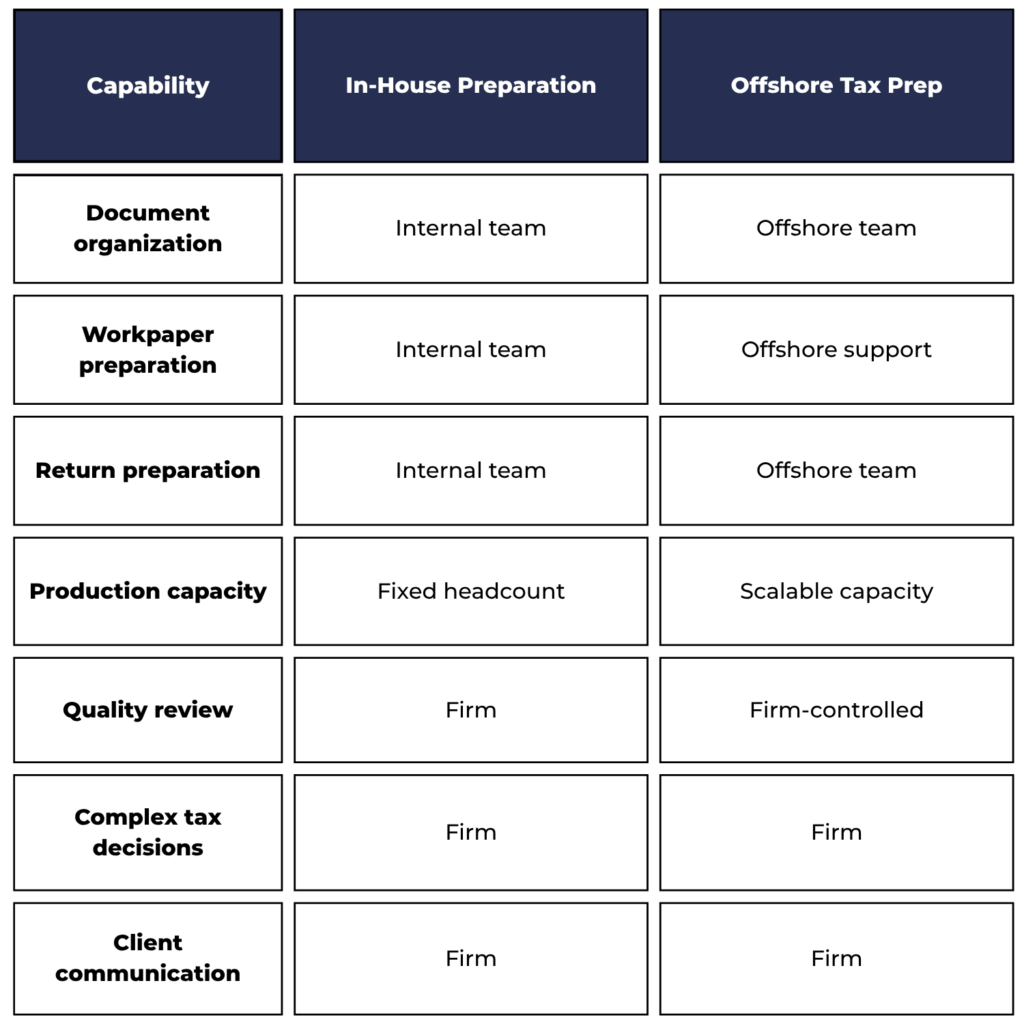
The key difference is flexibility. Offshore support adds preparation capacity while the CPA firm continues to control review, decisions, and client-facing responsibilities.
Quality Control Still Matters
Offshore tax preparation should operate within clearly documented procedures. Standardized workpapers, review checkpoints, escalation procedures, and secure document handling help keep the workflow consistent.
The CPA firm’s reviewers can identify exceptions and make final decisions before a return is filed. Professional responsibility and client ownership remain with the firm.
Offshore support can also complement bookkeeping and accounting, financial accounting advisory services, and broader accounting services for business clients.
The Bottom Line
A growing volume of 1120S and 1065 returns does not necessarily require a CPA firm to build a proportionally larger internal tax team.
With a defined offshore tax preparation workflow, firms can delegate standardized production tasks while retaining control over review, tax decisions, client communication, and final filing.
XACT.Inc provides white-label, offshore tax preparation and accounting support that helps CPA firms expand production capacity while keeping client relationships and final review in-house.