If you’re a CFO, CPA partner, or startup founder weighing cloud bookkeeping against a traditional, desk-bound approach, 2026 is the year to settle it. Firms that shifted to outsourcing for accounting firms and cloud delivery report a 30% cost reduction and 40 hours saved per month once lost to manual entry. Firms holding onto legacy systems are falling behind.
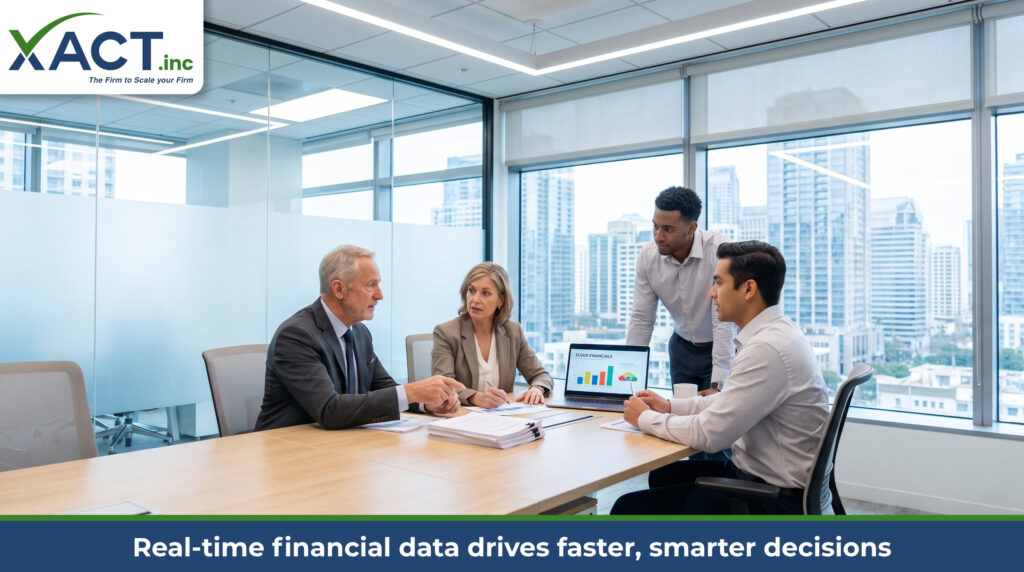
The Traditional Model Is Showing Its Age
Traditional, in-house bookkeeping was built for filing cabinets and once-a-month reconciliations. It doesn’t hold up well now.Common pain points include:
● Staffing bottlenecks. Hiring and retaining in-house bookkeepers is slow and expensive.
● Delayed visibility. Monthly close cycles mean decision-makers often review financial statements in accounting that are already weeks old.
● Manual error risk. Spreadsheet-based accounts payable accounts receivable tracking invites duplicate entries and mismatches.
● Limited scalability. Growth usually means adding headcount, not just software.
● Higher overhead. Office space and full-time salaries add up fast next to a lean, outsourced structure
Why Cloud Bookkeeping Is Winning in 2026
Cloud bookkeeping flips each pain point. Real-time dashboards and automated reconciliations mean financial reports in accounting are available on demand instead of weeks later. Add artificial intelligence in accounting, categorization, anomaly detection, predictive cash flow, and the accuracy gap widens further.
Firms using bookkeeping software for business paired with an outsourced delivery model typically report:
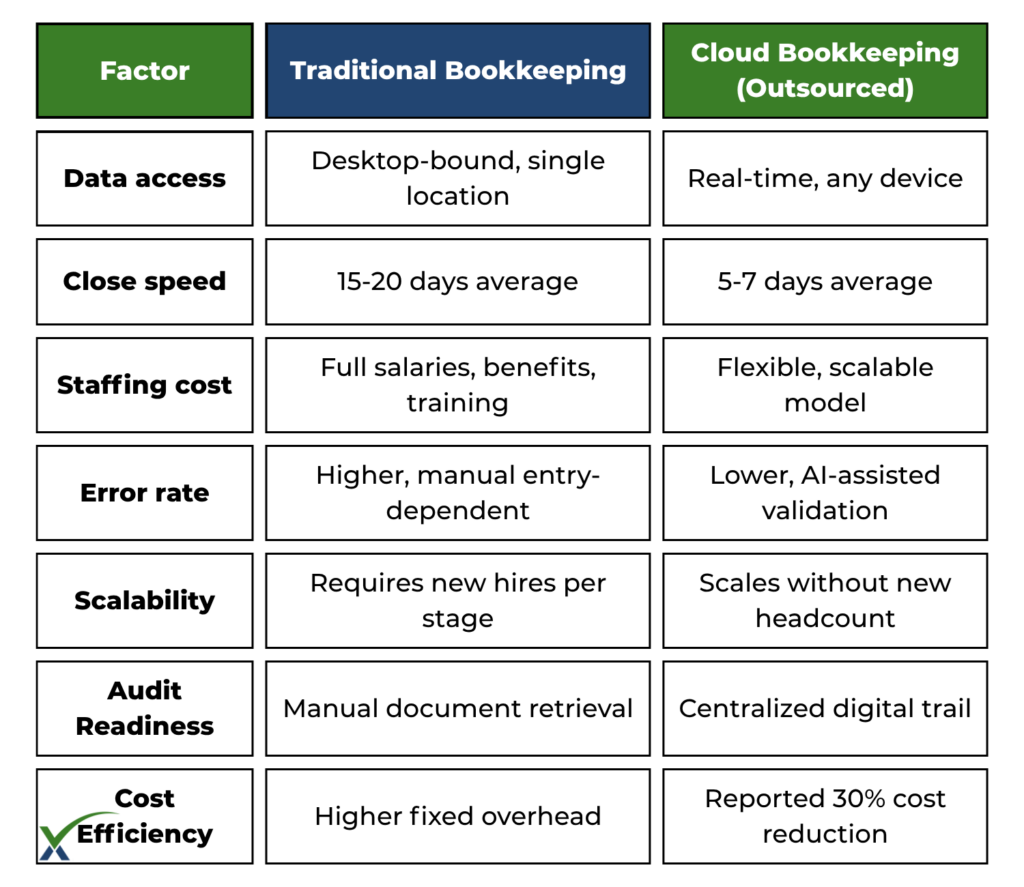
● Monthly close cut from 15-20 days down to 5-7 days
● Up to 40 hours saved per month across finance staff
● A 30% cost reduction versus a full in-house team
● Real-time access to accounting and financial statements from any device
● Stronger audit readiness, with centralized, time-stamped data
Cloud vs. Traditional: A Side-by-Side Look
A Real-World Scenario
Consider a mid-sized CPA firm with about 15 staff, running bookkeeping in-house with manual reconciliations. Its monthly close routinely took 18 days, with staff chasing invoices and reconciling accounts payable accounts receivable by hand. After moving to an outsourced cloud bookkeeping partner, the close cycle dropped from 18 days to 6, and roughly 35 hours per month were freed up for client advisory work instead of back-office cleanup. This scenario is illustrative, not a specific named case, but it reflects the pattern firms typically report after switching.
Why CPA Firms Are Turning to Outsourced Cloud Models
More CPA firms are partnering with best outsourced accounting services providers instead of building bookkeeping capacity in-house, gaining trained professionals and standardized workflows without the overhead of managing an internal team.
This is where XACT.Inc fits in. As an outsourced partner offering accounting & bookkeeping services and tax and advisory services for CPA firms, sole practitioners, and growing enterprises, Xact’s cloud-based model solves what traditional bookkeeping struggles with, backed by consistent quality controls and financial accounting advisory services that keep decision-makers ahead of their numbers.
For firms preparing for an audit of financial statements, managing tax returns for businesses, or modernizing bookkeeping help for small business clients, the outsourced cloud model offers speed and accuracy traditional processes can’t match at scale.

The Bottom Line
2026 has made the answer clear. Cloud bookkeeping, delivered through a trusted outsourced partner, outperforms traditional in-house bookkeeping on cost, speed, accuracy, and scalability. Firms that switched are already seeing the 30% cost reduction and 40 hours saved per month that come with it.
If your firm is ready to move to a modern, cloud-based, outsourced solution, Xact can help. Contact XACT.Inc today to learn how our team can streamline your bookkeeping and give your firm room to grow.