
Accounts payable becomes harder to manage as a CPA firm grows. More clients mean more invoices, vendors, approvals, payment schedules, reconciliations, and follow-ups. The work needs to be accurate, but increasing AP volume does not always justify another full-time employee
That is why accounts payable outsourcing is becoming a practical growth strategy for CPA firms. Firms can move routine AP processing to an offshore accounting team while keeping client relationships, approvals, and final review in-house.
The result is a more scalable operating model that can help reduce AP costs and keep month-end close moving.
What Accounts Payable Outsourcing Actually Means
Accounts payable outsourcing moves routine AP production work to an external accounting team. This can include invoice entry, coding, vendor reconciliation, payment preparation, documentation, and maintaining AP records.
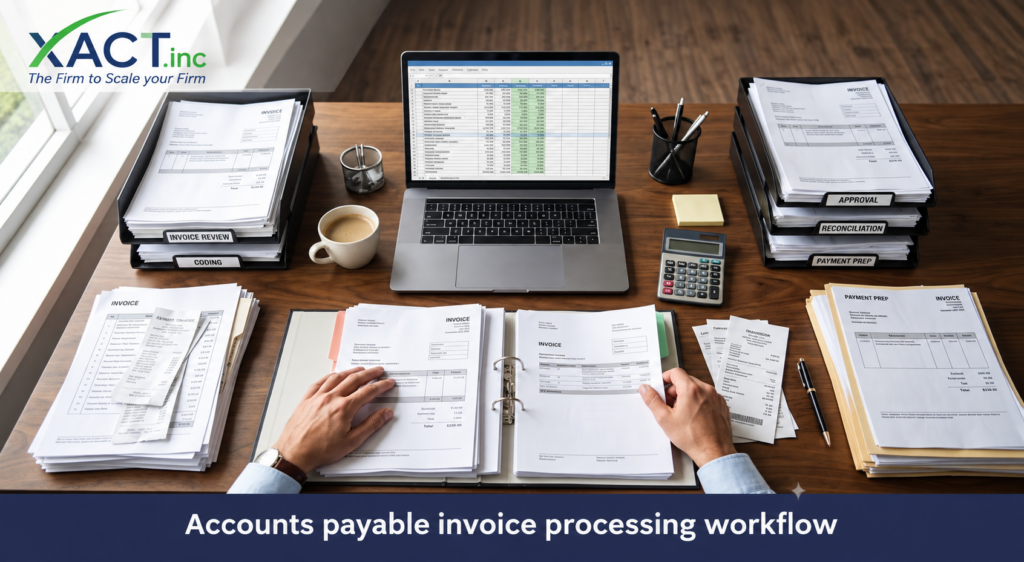
It fits naturally alongside bookkeeping and accounting services. The CPA firm continues managing the client relationship while the outsourced team handles repetitive production work.
Outsourcing does not mean giving up control. The firm still determines processes, approval requirements, quality standards, and client-facing responsibilities.
Why AP Becomes a Problem as Firms Grow
AP volume can increase quickly when a firm adds new business clients. A growing client base can mean hundreds or thousands of invoices moving through different systems every month.
That creates several challenges:
- Internal staff spend too much time on repetitive AP work.
- Invoice backlogs can delay month-end close.
- Hiring adds salaries, benefits, training, and management costs.
- Senior staff spend time processing transactions instead of higher-value accounting and advisory work.
For firms providing accounting services for business clients, controlling this workload becomes increasingly important
How Outsourcing Can Cut AP Costs by 60%
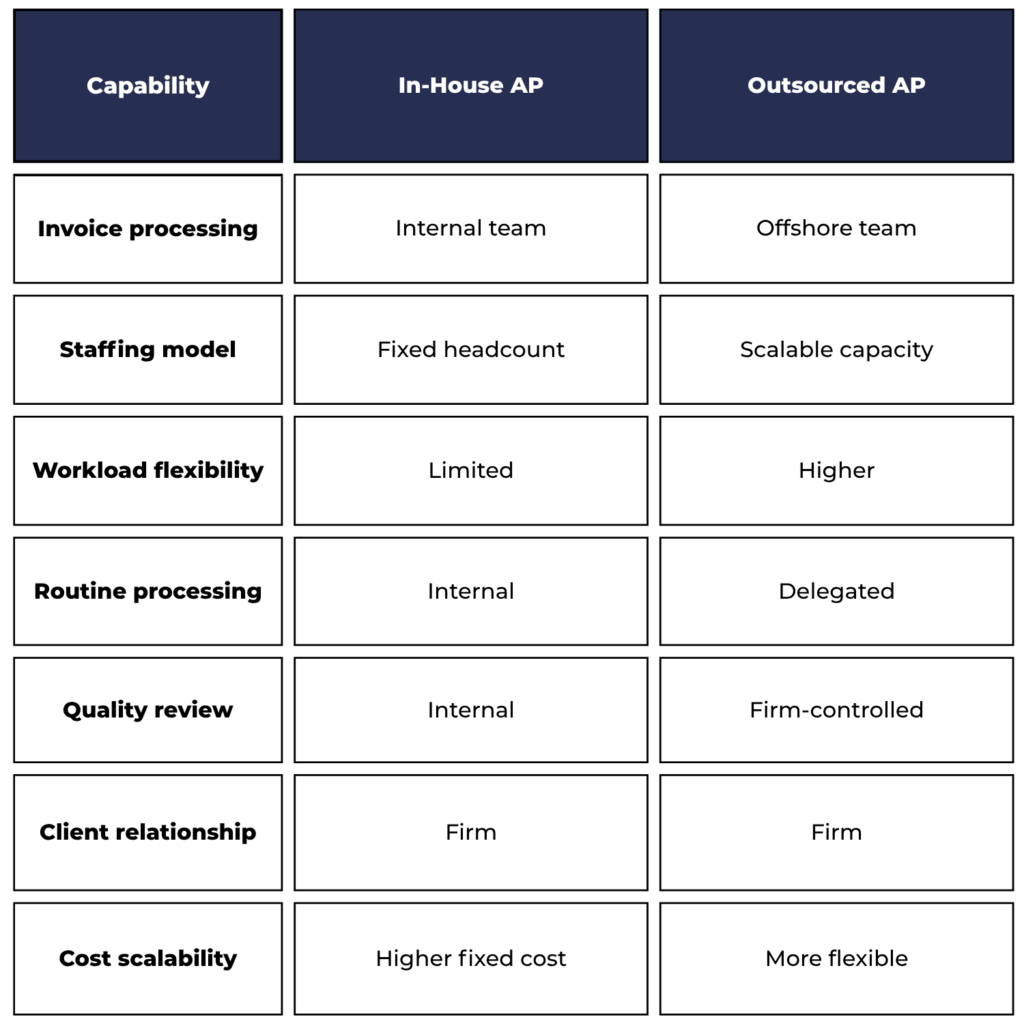
The potential cost advantage comes from changing how capacity is added.
With an internal model, a firm may need to hire whenever AP volume reaches the limits of its existing team. That creates fixed employment costs even when workload fluctuates.
An offshore model allows firms to add processing capacity without automatically adding another permanent employee.
Savings can come from lower production costs, reduced hiring requirements, and better use of existing employees. Actual savings vary by firm, client mix, technology, and workflow, so 60% should be viewed as a potential target rather than a guarantee.
In-House AP vs. Outsourced AP
How AP Outsourcing Helps Firms Close Faster
AP problems often appear during month-end close. Missing invoices, delayed approvals, and unreconciled vendor balances can leave accounting teams chasing information instead of finalising financial statements.
A dedicated AP team can process transactions throughout the month instead of allowing work to build up at the end of the reporting period.
This gives the firm’s accounting team cleaner information and more time for reconciliations, financial reports in accounting, financial statements, and client review
What the CPA Firm Still Controls
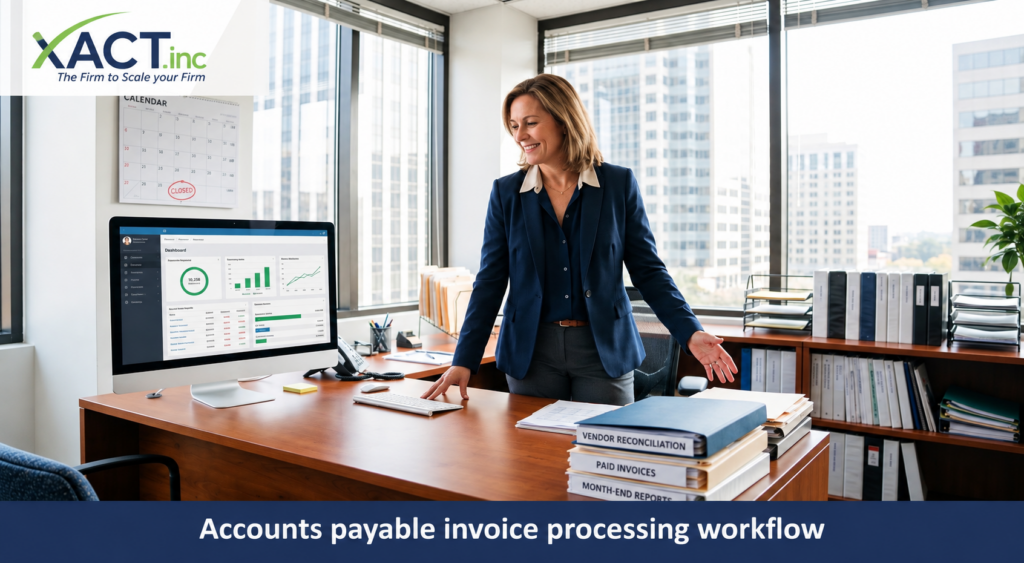
Successful outsourcing for accounting firms does not mean handing over the client relationship.
The CPA firm’s internal team can continue to control:
- Client communication
- Approval policies
- Quality standards
- Exception handling
- Final review
- Financial reporting
- Tax and advisory services
The outsourced team follows the firm’s processes and handles the production workload
Where AP Outsourcing Fits Best
AP outsourcing is particularly useful for CPA firms managing recurring, transaction-heavy work across multiple clients.
It can complement accountancy and bookkeeping services, bookkeeping and accounting services, accounts receivable outsourcing services, and other outsourced accounting functions.
Firms can start with selected clients or AP processes, establish review procedures, measure accuracy and turnaround time, and expand once the workflow is proven.
The Bottom Line
Accounts payable does not have to grow at the same rate as a CPA firm’s headcount.
By outsourcing repetitive AP production work, firms can add capacity without automatically adding permanent employees, reduce cost pressure, and give internal teams more time for accounting, financial reporting, and client-facing work.
For CPA firms targeting a potential 60% reduction in AP costs and a faster close, the bigger opportunity is building a scalable production model where client growth does not automatically trigger another hiring cycle.
XACT.Inc provides white-label, offshore accounting and bookkeeping support that helps CPA firms scale production without scaling headcount. Contact XACT.Inc to see how outsourced AP can fit into your firm’s growth model.