
Bookkeeping backlogs can become a serious operational problem for growing CPA firms. A few weeks of delayed transactions can quickly turn into months of uncategorised activity, unreconciled accounts, missing documents, and financial reports that are no longer current.
Clearing that backlog internally often means pulling experienced accountants away from current clients and adding pressure during an already busy period.
That is where offshore accounting teams can add production capacity. By moving defined catch-up bookkeeping work to an offshore team, CPA firms can process large volumes of historical transactions while keeping review, client communication, and accounting decisions in-house.
Why Bookkeeping Backlogs Build Up
A bookkeeping backlog rarely comes from one major issue. It usually develops gradually.
A client may stop sending documents on time. Transactions may remain uncategorised. Bank accounts may go unreconciled for several months. Meanwhile, the CPA firm’s team continues handling current client work.
Eventually, the firm may be facing six months, nine months, or even a year of unfinished bookkeeping.
Common backlog problems include
- Uncategorised bank transactions
- Unreconciled bank and credit card accounts
- Missing invoices and receipts
- Accounts payable and accounts receivable records that are not current
- Old journal entries requiring review
- Financial reports that cannot be finalised
For firms providing bookkeeping and accounting services, catching up requires significant production capacity
How Offshore Teams Approach Catch-Up Bookkeeping
Catch-up bookkeeping works best when the backlog is broken into defined production stages.
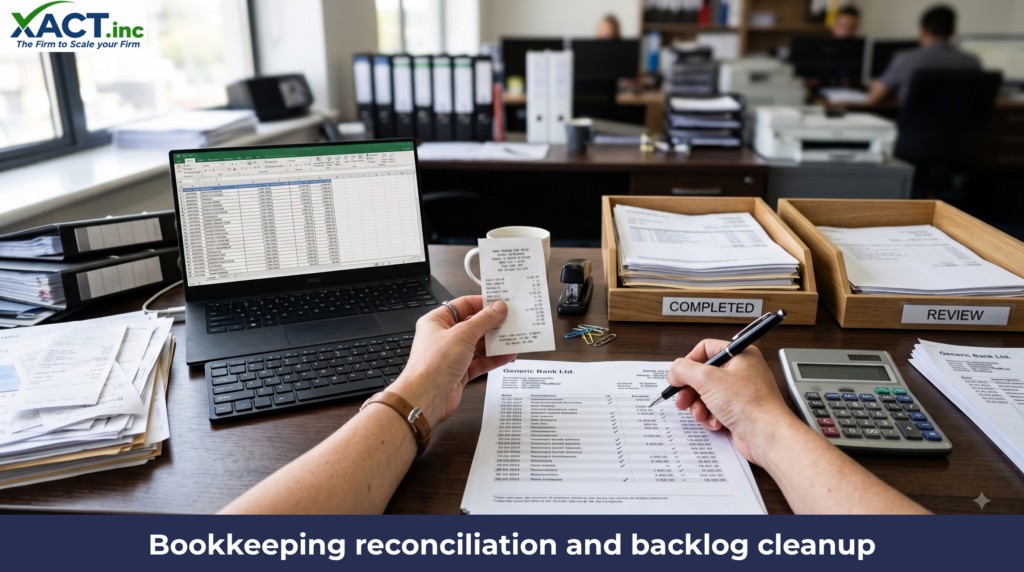
An offshore accounting team can begin by organising client documents, reviewing transaction records, categorising routine transactions, reconciling accounts, and preparing supporting schedules.
The CPA firm’s internal team can then review exceptions and make decisions involving accounting policies, unusual transactions, or client-specific requirements.
This creates a practical division between production work and professional review.
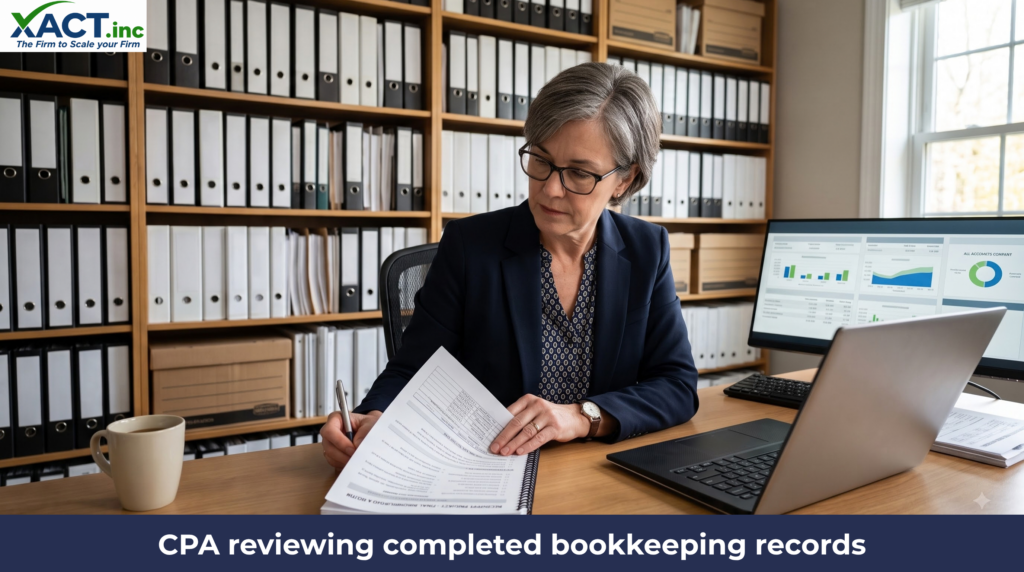
Clearing Months of Backlog Without Adding Permanent Headcount
Suppose a CPA firm has 10 clients with six months of unfinished bookkeeping.
That represents thousands of transactions that need to be processed before the firm’s team can produce reliable financial reports.
Hiring additional permanent employees may not make sense if the backlog is temporary.
An offshore team provides a different model. The firm can add production capacity specifically for the catch-up period and then adjust the workflow once the backlog has been cleared.
The objective is not simply to process more transactions. It is to clear historical work without allowing the backlog to disrupt the firm’s ongoing client work.
In-House vs. Offshore Catch-Up Bookkeeping
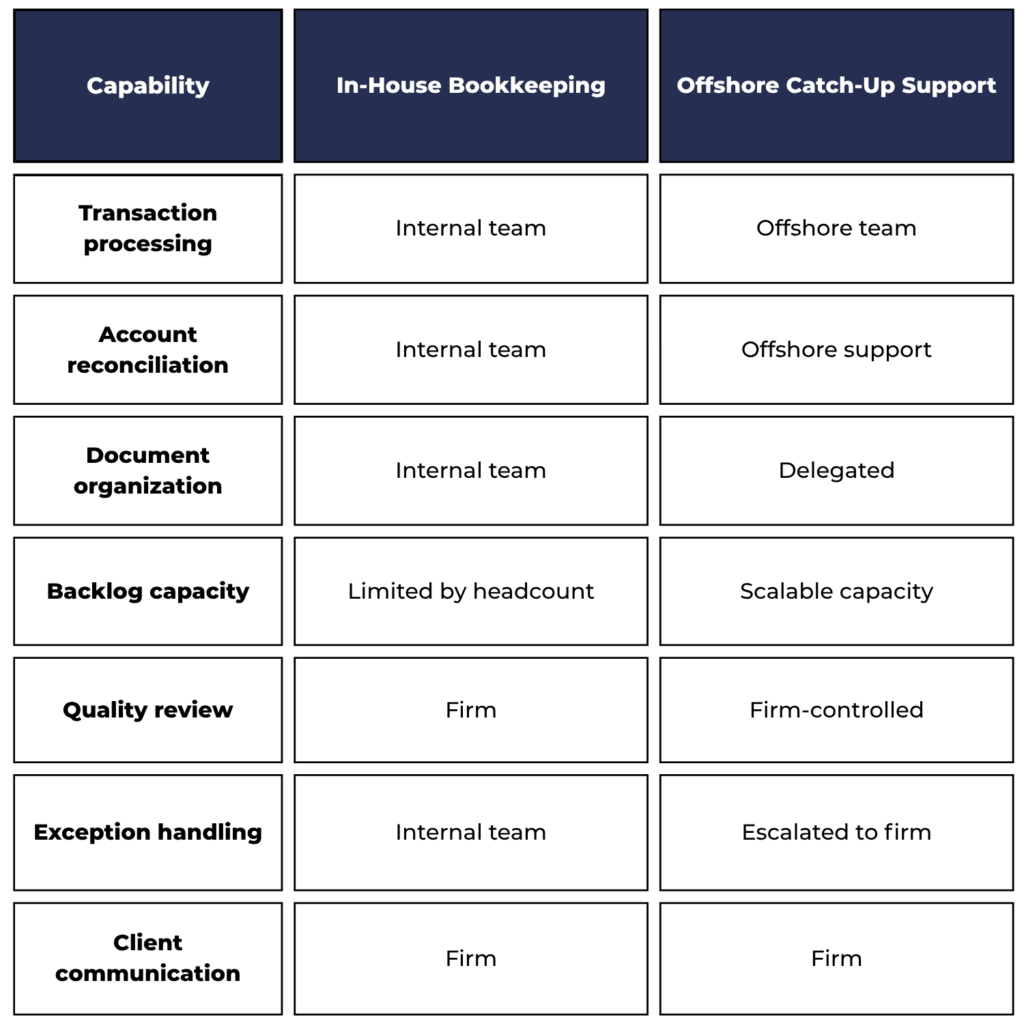
How Firms Maintain Quality During a Catch-Up Project
Speed cannot come at the expense of accuracy.
A structured catch-up workflow should include clear accounting procedures, client-specific instructions, reconciliation checks, documentation standards, and defined escalation rules.
The offshore team can flag transactions that require clarification instead of making assumptions. The CPA firm’s professionals can then review exceptions and resolve issues before the books are finalised.
This approach allows firms to increase production without giving up control over accounting quality.
What the CPA Firm Still Controls
Outsourcing bookkeeping does not mean outsourcing the client relationship or professional responsibility.
The CPA firm’s internal team can continue to control:
- Accounting policies
- Client communication
- Complex transactions
- Exception resolution
- Final review
- Financial reporting
- Tax and advisory services
The offshore team handles the production workload according to the firm’s processes and documentation requirements.
From Backlog Cleanup to Ongoing Bookkeeping
Catch-up bookkeeping does not have to be a one-time exercise.
Once historical records are brought up to date, firms can establish a recurring workflow that keeps transactions processed and accounts reconciled throughout the month.
This can turn a reactive cleanup project into a more predictable bookkeeping and accounting process.
For CPA firms managing multiple clients, that consistency can reduce the likelihood of another large backlog developing later.
The Bottom Line
Months of unfinished bookkeeping can consume valuable CPA capacity, delay financial reports, and create unnecessary pressure on internal teams.
Offshore accounting teams can provide additional production capacity for transaction processing, reconciliation, document organisation, and other routine catch-up work while the CPA firm retains control over review, exceptions, and client relationships.
For firms facing a large bookkeeping backlog, the opportunity is not simply to clear old work faster. It is to build a scalable process that keeps the books current after the backlog is gone.
XACT.Inc provides white-label offshore bookkeeping and accounting support that helps CPA firms clear production backlogs and handle ongoing client work without automatically increasing internal headcount.